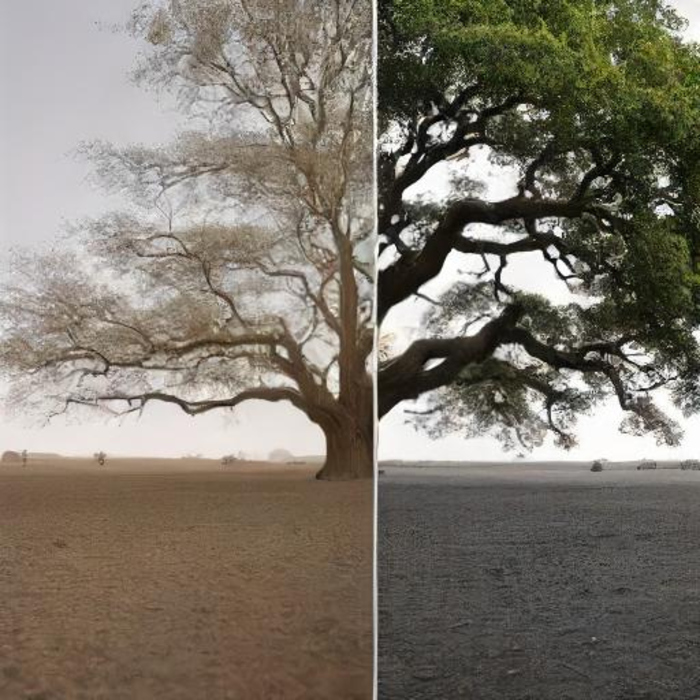
Fruit season is a specific period of time in the year when certain types of fruit reach maturity and are ready to be harvested. Climatic factors such as temperature, rainfall, humidity, sunlight, and wind play an important role in determining the fruit season for various types of plants. The relationship between climate and fruit season is important for farmers, agricultural operators, and consumers to plan agricultural and consumption activities.
1. Effect of Temperature on Fruiting Season
Temperature is the main factor affecting fruit season. Each plant has an optimal temperature range for growth and fruit production. For example, apple and cherry plants need cold temperatures to flower and form fruit. In warmer climates, the fruiting season for these plants may vary or not occur at all. Tropical plants such as mango and rambutan require warmer temperatures and have a fruiting season that usually occurs in summer.
According to a study by Lobell and Field (2007), temperature changes due to climate change can cause a shift in the fruiting season for many plants. An increase in temperature can speed up the fruit ripening process, resulting in an earlier fruit season, or conversely, slow growth and cause a later fruit season.
2. Influence of Rain and Humidity
The amount of rain and humidity play an important role in determining the fruit season. Fruits such as durian and mangosteen, for example, usually have a fruiting season after the rainy season when the soil has enough moisture to support fruit growth. On the other hand, lack of rain or too low humidity can cause a reduction in the quantity and quality of fruit.
Research by Jones et al. (2012) showed that changes in rainfall patterns due to climate change can cause uncertainty in the fruiting season. Shifts from normal rainfall patterns can disrupt flowering and fruiting cycles, resulting in a shift in the fruiting season or a decrease in harvest.
3. Sunlight and Fruit Season
Sunlight is the main source of energy for photosynthesis, which is an important process in plant growth and fruit formation. The amount and intensity of sunlight received by the plant can affect the time of flowering and fruit formation. Plants that grow in areas with enough sunlight tend to have a more consistent fruiting season compared to plants in areas with less light.
According to Taiz and Zeiger (2010), plants that grow in the shade or in areas with insufficient sunlight may experience a delay in the fruit season or produce fruit of lower quality.
4. Climate Change and Fruit Season
Global climate change has brought changes in weather patterns, such as an increase in global temperatures, changes in rainfall patterns, and an increase in extreme weather events. This has caused a shift in the fruiting season for many crops. For example, González-Hidalgo et al. (2010) reported that the increase in temperature in the Mediterranean area has caused the olive season to shift earlier than usual.
Farmers and agricultural operators need to adapt to these changes by choosing plant varieties that are resistant to climate change, using efficient irrigation techniques, and monitoring weather changes carefully to better manage the fruit season.
Conclusion
The relationship between climate and fruit season is complex and influenced by various factors. An understanding of this relationship is important for effective agricultural management and to ensure the availability of fruit throughout the year. With ongoing climate change, it is important to continue to learn and understand how climate factors affect the fruit season so that we can overcome constraints and take advantage of opportunities.
Reference:
- Lobell, D. B., & Field, C. B. (2007). Global scale climate–crop yield relationships and the impacts of recent warming. Environmental Research Letters, 2(1), 014002.
- Jones, P. G., & Thornton, P. K. (2012). The potential impacts of climate change on maize production in Africa and Latin America in 2055. Global Environmental Change, 13(1), 51-59.
- Taiz, L., & Zeiger, E. (2010). Plant Physiology. Sinauer Associates.
- González-Hidalgo, J. C., Brunetti, M., & De Luis, M. (2010). Precipitation trends in the Mediterranean region: 1950–2000. International Journal of Climatology: A Journal of the Royal Meteorological Society, 30(3), 406-423.
Date of Input: 30/07/2024 | Updated: 05/09/2024 | abdillah
MEDIA SHARING